When the Good Luck Charm Starts Calling the Shots

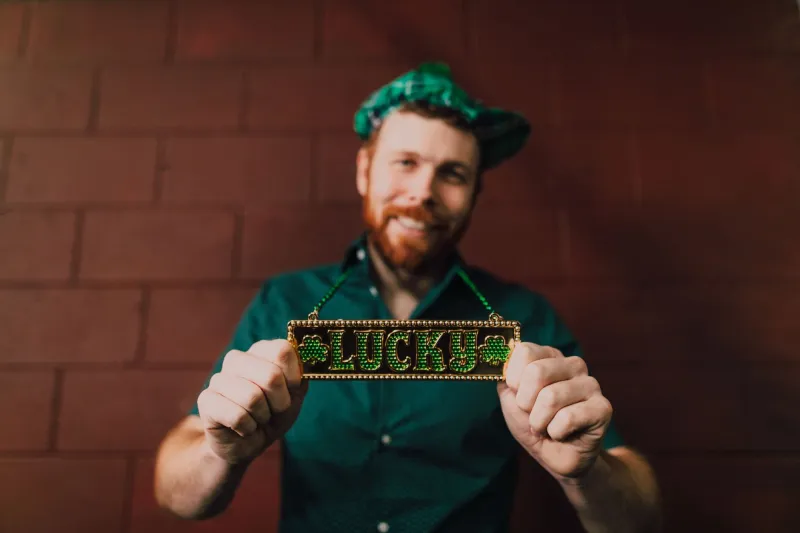
Picture this: a performer has one of the best nights of their career. The energy was electric, the crowd was locked in, everything clicked. And on the way out, they notice they were wearing the same beat-up hoodie they'd thrown on without thinking. Fast forward six months, and that hoodie has become non-negotiable. Miss the hoodie, miss the magic — or so the story goes.
It sounds almost charming from the outside. But from the inside? It's a slow-motion trap.
This is the superstition spiral, and it catches more artists than most would ever admit out loud.
How Rituals Are Born
Here's the thing — rituals aren't born bad. Most of them start as genuine anchors. A specific warm-up sequence that gets the body loose. A quiet moment of stillness before stepping into the spotlight. A playlist that shifts the mental gears. These habits earn their place because they work, at least at first. They create a reliable internal state, a sense of readiness that's hard to manufacture on demand.
The brain, being the pattern-hungry machine it is, doesn't just notice when something works — it files it away and starts building a case. You did X before the good show. Therefore X caused the good show. That's not logic, but it feels like logic, and in the high-stakes, high-pressure world of performance, feelings tend to win.
Psychologists call this kind of thinking magical causation. Athletes deal with it constantly. So do musicians, actors, dancers, comedians — anyone whose livelihood depends on showing up and delivering under pressure. The ritual becomes a psychological shortcut to confidence, and for a while, that shortcut is genuinely useful.
The Moment It Flips
The shift is subtle, which is exactly what makes it dangerous.
At some point, the ritual stops being a tool you use and starts being a condition you require. Instead of thinking this helps me get ready, the internal script becomes I can't be ready without this. That's a completely different relationship, and it has real consequences.
Suddenly, a skipped step isn't just an inconvenience — it's a crisis. A changed venue, a different schedule, a last-minute adjustment that disrupts the routine becomes a source of genuine anxiety. The performer is no longer drawing on their own preparation and skill; they're outsourcing their confidence to an external object, sequence, or circumstance.
And here's the cruelest part: the ritual often still feels like it's working, even when it isn't. Because the anxiety of missing it is so loud, completing it brings relief — and that relief gets misread as readiness. You're not actually performing better. You're just quieting the alarm bell you installed yourself.
Grounding Practice vs. Limiting Superstition — What's the Difference?
Not every pre-show habit deserves suspicion. The goal isn't to torch your entire routine in the name of spontaneity. The goal is to get honest about which practices are genuinely serving you and which ones have quietly started running the show.
A few questions worth sitting with:
Does this habit build something, or just prevent something? A warm-up that gets your voice, body, or mind ready is constructive. A ritual performed purely to ward off a bad outcome is reactive. One is about building a state; the other is about avoiding a fear.
What happens if you skip it? Not just logistically, but emotionally. If missing a step sends you into a spiral, that's useful information. Healthy practices can flex. Dependencies can't.
Has this habit kept pace with where you are now? A ritual that served you at 23 playing small venues might be completely disconnected from who you are at 35 headlining bigger rooms. Growth changes everything — including what you need to get ready.
Are you choosing this, or are you just doing it? Intentional practice has a different texture than compulsive repetition. One feels like ownership. The other feels like obligation.
The Psychology of Letting Go
Breaking a ritual dependency isn't as simple as just stopping. The anxiety is real, and pretending it isn't doesn't help anyone. What actually works is a more gradual process — one that's less about eliminating the habit and more about shifting the relationship to it.
Start by making the ritual conscious. Most superstitious habits operate in the background, automatic and unexamined. Naming them — literally writing them down and asking what function they serve — starts to loosen their grip. You're not attacking the habit; you're just looking at it clearly.
From there, experiment with small variations. Keep the core of the routine but change one element intentionally. Not to prove you can survive without it, but to build evidence that you are the source of your readiness, not the object or sequence. Every performance that goes well after a modified ritual is data — data that slowly rewrites the internal story.
It also helps to build what might be called a portable foundation: a set of internal practices — breathing, focus techniques, physical grounding — that can go anywhere with you regardless of what's available externally. When your confidence is rooted in something you carry inside, you become far less vulnerable to disrupted circumstances.
What This Actually Looks Like in Practice
For David Clovers, the conversation about ritual has always been an ongoing one rather than a solved problem. The honest reality is that creative people are wired to find patterns, to build systems, to look for the formula that makes the magic repeatable. That instinct isn't something to fight — it's something to direct.
The performers who navigate this best aren't the ones who reject ritual entirely. They're the ones who hold their habits loosely enough to question them. They distinguish between the pre-show walk that genuinely clears the head and the lucky token that's just managing anxiety. They stay curious about their own psychology rather than just running the same script on autopilot.
There's something freeing about realizing that no hoodie, no playlist, no specific sequence of steps made you good at what you do. You did that. The preparation, the reps, the years of showing up — that's what's in the room with you every time you perform.
The rituals were just the story you told yourself while you built something real.
Maybe it's time to update the story.