When Your Lucky Charm Becomes a Leash: Breaking Free From Superstition's Hidden Hold
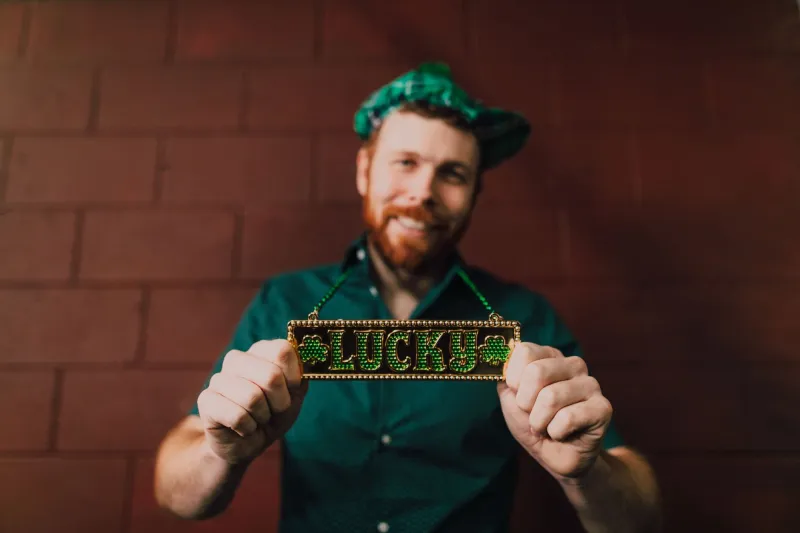
Let's be honest — there's something deeply human about reaching for a lucky object before a big moment. The worn-down bracelet tucked under a sleeve. The specific playlist that has to play in the exact same order before stepping onstage. The pre-show meal that absolutely cannot change, not even once, not even when the only diner that serves it is three towns away.
None of that is inherently bad. Routines matter. Rituals create mental containers for focus. But somewhere between "this helps me feel ready" and "I literally cannot perform without this," something shifts — and not in a good direction.
The question worth sitting with isn't whether you have rituals. It's whether your rituals have you.
The Comfort Zone Dressed Up as Preparation
Here's the sneaky thing about superstition-based thinking: it often disguises itself as professionalism. You tell yourself you're being disciplined, consistent, intentional. And on the surface, that's not entirely wrong. Consistency is valuable. Intentionality matters.
But real preparation builds capability. Superstitious dependency builds fragility.
Think about it this way — if your confidence is genuinely rooted in the work you've put in, losing your lucky socks an hour before showtime is annoying, maybe even a little rattling, but it doesn't break you. If your confidence is primarily anchored to those socks existing on your feet, you've handed your performance over to a piece of fabric. That's not a ritual. That's a ransom note.
A lot of performers don't realize they've crossed that line until something forces the issue. The lucky item gets lost. The ritual gets disrupted. The routine becomes impossible. And suddenly, the whole internal architecture crumbles — not because the performance was underprepared, but because the psychological scaffolding was built on sand.
Real Artists, Real Ceilings
This isn't a theoretical problem. Artists across disciplines have talked openly about moments when their own belief systems became obstacles.
There's a well-documented pattern in sports psychology — athletes who become rigidly dependent on pre-game rituals often struggle more when those rituals are disrupted than athletes who use flexible, adaptable mental frameworks. The same dynamic plays out in performance arts. A musician who insists on a specific warm-up room, a specific temperature, a specific set of pre-show interactions isn't building confidence — they're building a list of conditions their confidence requires in order to show up.
And here's the creative ceiling part: when you're that locked into conditions, you stop growing in the spaces that actually matter. You're not experimenting. You're not pushing. You're managing a very delicate system, and most of your mental energy goes toward keeping that system intact rather than evolving your craft.
Some of the most honest conversations in creative communities happen when someone admits, "I realized I was using my ritual as an excuse not to deal with the real fear underneath it." That's where the real work begins.
The Psychology Behind Why This Happens
Superstitious thinking thrives in high-stakes, low-control environments. Performance is exactly that kind of environment. You can prepare endlessly and still have a bad night. You can walk out underprepared and somehow catch lightning in a bottle. The randomness is real, and it's uncomfortable.
So the brain does what brains do — it looks for patterns. It finds a correlation between the lucky charm and the good show, or between the ritual and the feeling of readiness, and it starts treating that correlation like causation. Over time, the belief calcifies. The charm stops being a comfort object and starts being a perceived prerequisite.
Psychologists call this "magical thinking," and it's not a flaw — it's a feature of human cognition. The problem isn't that it happens. The problem is when it goes unexamined.
The artists who level up are usually the ones who get curious about their own patterns rather than just executing them on autopilot.
How to Tell the Difference
So how do you know if your ritual is serving you or limiting you? A few honest questions worth asking:
Does the ritual build toward something, or does it just maintain a feeling? A warm-up that improves your technical readiness is doing real work. A ritual that just manages anxiety without addressing its root cause is a Band-Aid.
What happens when it's disrupted? If the answer is "I adapt and get on with it," you're probably fine. If the answer involves genuine panic or a significant performance dip, that's worth examining.
Are you avoiding growth in order to protect the ritual? This one stings, but it's important. If you've turned down opportunities, avoided new environments, or resisted change partly because it would disrupt your system — that's a ceiling, not a routine.
Is the ritual a secret you're embarrassed about? Sometimes our gut already knows when something has tipped from healthy to limiting. Embarrassment is often that gut talking.
Breaking the Pattern Without Breaking Yourself
The goal isn't to strip everything away and perform in some kind of superstition-free vacuum. That's not realistic, and honestly, it's not necessary. The goal is to build a foundation of genuine confidence — rooted in skill, experience, and self-awareness — that doesn't collapse the moment conditions aren't perfect.
That might mean gradually loosening the grip on specific rituals to test what's actually underneath them. It might mean working with a coach or therapist who understands performance psychology. It might just mean having an honest conversation with yourself about what you're really afraid of and whether the lucky charm is helping you face that fear or just helping you avoid it.
David Clovers has talked about this tension before — the pull toward comfort systems versus the necessity of staying adaptable, especially when the work keeps evolving and the stages keep changing. Growth doesn't happen inside perfectly maintained conditions. It happens in the messy, uncertain, sometimes charm-free moments when you find out what you're actually made of.
The Real Lucky Break
Here's the reframe worth considering: the luckiest thing that can happen to a performer isn't finding the perfect ritual. It's developing enough trust in their own preparation that they don't need one.
That kind of confidence isn't built by a charm. It's built by doing the work, taking the hits, adapting to disruption, and showing up anyway — even when the lucky socks are in a lost luggage claim somewhere in Chicago.
That's not the absence of ritual. That's the presence of something more durable: belief in yourself that doesn't require outside props to function.
And that, honestly, is the only luck worth chasing.