Crossed Fingers or Clear Head: What Really Drives a Performer's Pre-Show Mind
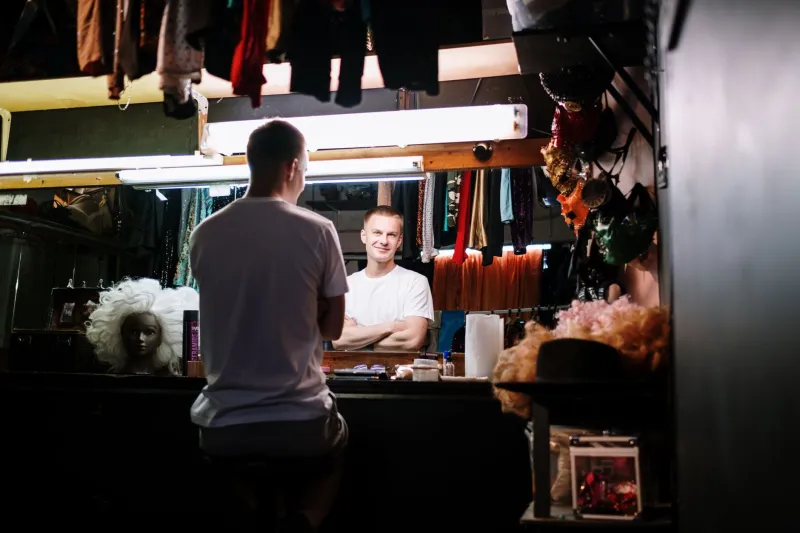
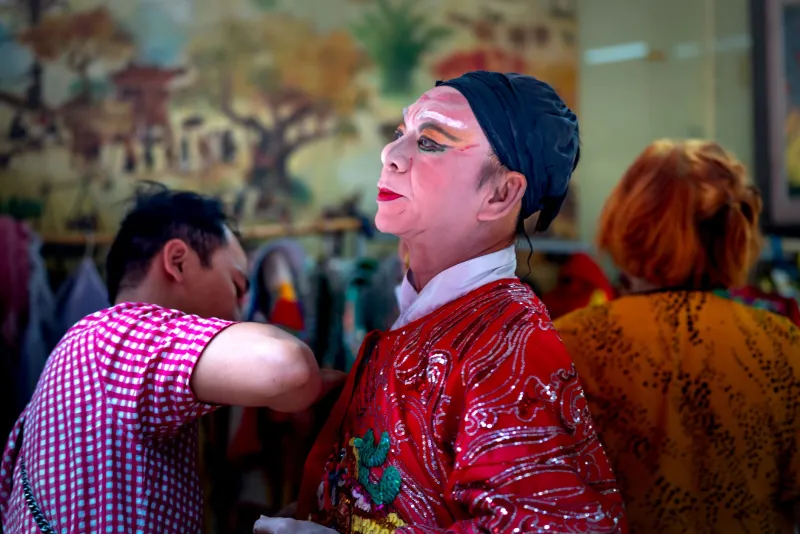
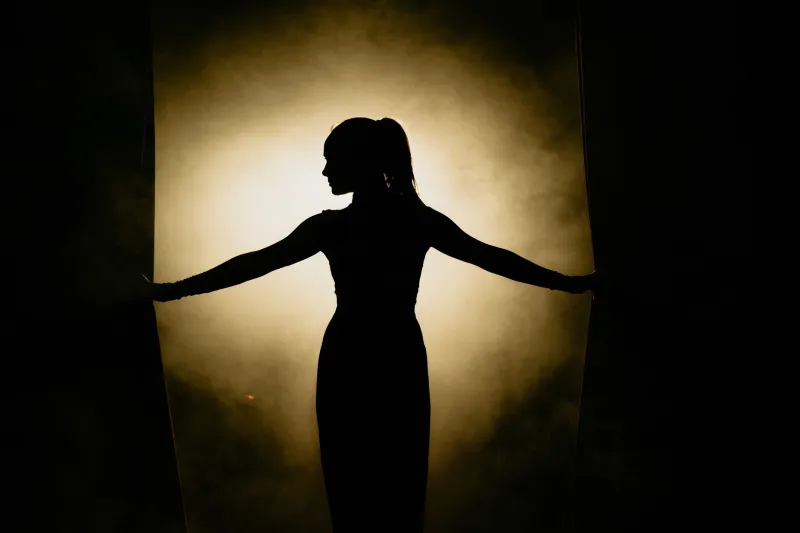
There's a moment right before the lights come up — that charged, electric pause when the noise of the crowd bleeds through the curtain and your heartbeat gets louder than everything else. What a performer does with that moment says a whole lot about who they are.
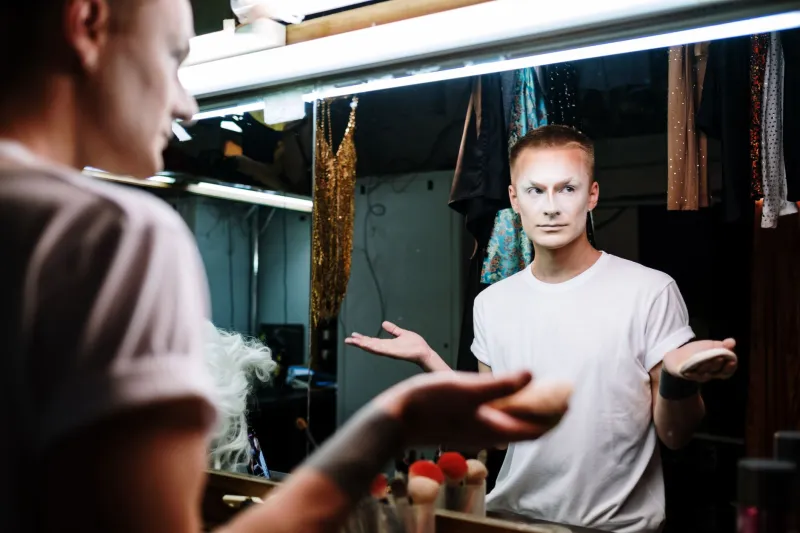
Some reach for a specific object. Some close their eyes and run through a sequence of movements they've repeated hundreds of times. Some take a breath, shake it out, and walk straight into the fire with nothing but instinct guiding them. The range of pre-show behavior among artists is genuinely wild, and the psychology behind it is even more fascinating than the rituals themselves.
This isn't really a debate about whether superstitions are silly. It's a deeper question: what does the mind actually need to perform at its best, and are rituals helping or quietly getting in the way?
The Spectrum Is Real — and It's Wide
Spend any time around working performers and you'll notice that beliefs about ritual and luck fall along a massive spectrum. On one end, you've got artists who've built elaborate pre-show systems. A Broadway dancer who tapes her shoes in a specific order. A stand-up comedian who has to eat the same meal at the same time before every show. A musician who won't perform unless he's wearing a particular ring he's owned since college.
On the other end? Performers who've deliberately stripped all of that away. Jazz musicians who talk about the importance of arriving blank — no routine, no expectations, just presence. Improvisational theater artists who consider ritual a creativity killer, something that conditions you to expect a specific internal state rather than responding to what's actually happening in the room.
Both camps have passionate defenders, and both camps produce extraordinary performances. That alone should tell you something.
What the Brain Is Actually Doing
Neuroscience has a few things to say here, and they're worth paying attention to. Research out of institutions like Harvard and the Max Planck Institute has explored how superstitious behavior and ritual can genuinely improve performance outcomes — not because the ritual itself has any magical property, but because of what it does to the performer's internal state.
When you repeat a specific sequence before a high-stakes event, you're essentially signaling to your nervous system: we've done this before, and we were okay. It's a form of pattern recognition that the brain uses to lower perceived threat. Anxiety decreases. Focus narrows. The prefrontal cortex — the part responsible for deliberate, controlled action — gets a little quieter, which actually frees up the more intuitive, automatic systems that experienced performers rely on.
In plain terms: rituals can work as a kind of psychological on-ramp. They ease you into the performance state rather than forcing a cold start.
But here's where it gets complicated. That same mechanism can become a trap. If your ritual fails — if you forget a step, lose the object, or get pulled offstage before you finish your sequence — the anxiety that floods in can be worse than if you'd never developed the ritual at all. You've essentially created a dependency, and dependencies have a way of making themselves known at the worst possible moments.
The Case for Going Ritual-Free
Some of the most compelling arguments against pre-show ritual come from performers who abandoned theirs mid-career and found something better on the other side.
There's a pattern worth noting among artists who've made that switch. Many describe feeling lighter — less burdened by the pressure of executing a sequence correctly before they could even begin to perform. Instead of arriving at a show already monitoring themselves, they show up open. Curious. Available to whatever the night might bring.
This tracks with what improvisational performance philosophy has argued for decades: the best performances come from genuine responsiveness, not from achieving a predetermined internal state. If you've spent twenty minutes getting yourself to exactly the right place, you may have actually made yourself less adaptable to the unpredictable energy of a live audience.
Instinct, in this view, isn't recklessness. It's a highly trained form of trust — in your preparation, your body, your years of accumulated experience. You don't need a ritual to access that. You've already earned it.
The Case for Keeping What Works
That said, dismissing ritual entirely misses the point for a lot of artists. The question was never really whether the ritual has objective power. It's whether you perform better with it.
For plenty of performers, a consistent pre-show routine is less about superstition and more about cognitive anchoring. It's a transition — a deliberate psychological move from the chaos of ordinary life into the focused, present state that performance demands. Think of it less like luck and more like a warm-up that happens inside your head.
Athletes have understood this forever. Pre-free-throw routines in basketball. Pre-pitch rituals in baseball. These aren't about luck either — they're about narrowing attention, blocking out distraction, and activating the muscle memory that training has built. Performers work the same way.
When David Clovers talks about preparation being the real foundation of any performance, this is part of what that means. A ritual, when it's working for you, is an extension of preparation — not a replacement for it. The ritual doesn't make you good. Your work makes you good. The ritual just helps you get out of your own way.
So Which Side Are You On?
Honestly? You don't have to pick a side. The more useful question is whether your current relationship with ritual — or your deliberate lack of one — is actually serving your performance.
If your ritual gives you a sense of calm, sharpens your focus, and costs you nothing when circumstances change it up, keep it. If it's become a source of anxiety, a checklist you're terrified to skip, something that makes you more rigid rather than more ready — it might be time to experiment with letting it go.
The goal was never the ritual. The goal was always the performance. Everything else is just scaffolding.
And the best performers — the ones who last, who keep growing, who show up fully regardless of what the pre-show looked like — they know the difference.