Lucky Socks, Pre-Show Prayers, and the Artists Who Refuse to Play Along: Inside the Performer's Relationship with Ritual
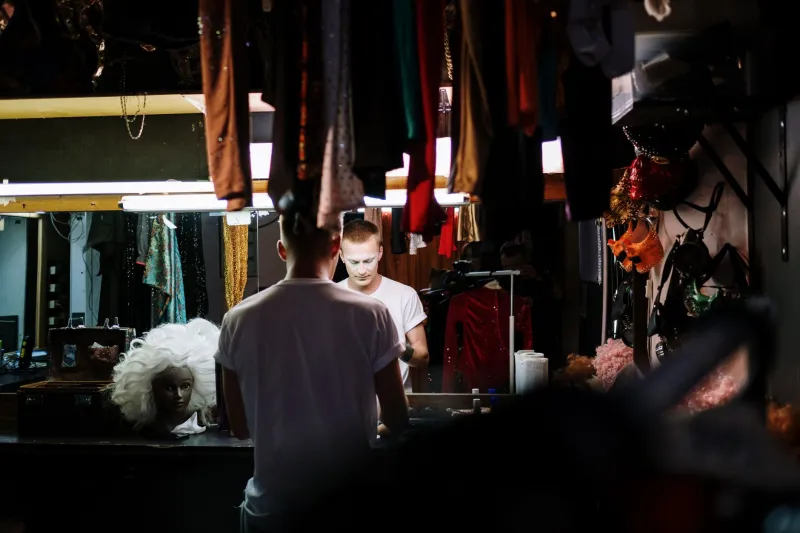
There's a running joke in certain performance circles that the only thing more varied than an artist's creative process is their pre-show ritual. One person's doing a full vocal warm-up while burning sage in the green room. The person next door is eating the exact same meal they had before their first successful gig in 2011. And then there's the third person — rolling their eyes at both of them, lacing up their shoes, and walking onstage like it's just another Tuesday.
All three of them are professionals. All three of them are good at what they do. And yet their relationship with luck, ritual, and superstition couldn't look more different.
So what's actually going on here?
The Psychology Behind the Ritual
Let's start with the believers — the performers who swear by their rituals the way some people swear by their morning coffee. Psychologists have a pretty solid explanation for this: it's called the illusion of control. When you're about to do something high-stakes and inherently unpredictable — like performing in front of a live audience — your brain desperately wants to feel like it has some grip on the outcome. Rituals, even completely arbitrary ones, scratch that itch.
Research out of Cologne, Germany found that golfers who were told they were playing with a "lucky ball" performed measurably better than those who weren't. The ball was the same. The golfer was the same. The only difference was belief. That's not a small thing — that's your mindset literally changing your output.
For performers, this translates in a really tangible way. A ritual — whether it's a specific breathing exercise, a phrase repeated in the mirror, or yes, a pair of lucky socks — can function as a psychological on-ramp. It signals to your nervous system: we've done this before, we know how this goes, we're ready. That signal is worth a lot when the lights come up and adrenaline starts doing its thing.
The Ritual Skeptics Aren't Wrong Either
Here's where it gets interesting, though. The performers who refuse to engage with superstition aren't just being contrarian — they've got their own solid logic.
A lot of seasoned artists will tell you that relying too heavily on a ritual creates a dependency that can actually work against you. What happens when you forget your lucky bracelet in a hotel room three states away? What happens when the specific song you always listen to before a show cuts out halfway through because your phone dies? If your confidence is tethered to an external object or sequence of events, you've handed a chunk of your mental stability to something outside your control.
That's a risk some performers simply aren't willing to take. Their philosophy is essentially: I am the ritual. Their preparation — the hours of practice, the muscle memory, the studied knowledge of their craft — that's the only anchor they need. Everything else is noise.
It's a compelling argument. And honestly, it's not all that different from what the ritual-keepers are doing. Both camps are trying to achieve the same thing: a calm, focused, confident mental state before the performance begins. They're just taking different roads to get there.
Where the Lines Get Blurry
The truth is, most performers don't fall neatly into either camp. The spectrum between "I won't go on without my lucky charm" and "superstition is for suckers" is wide, and most artists are somewhere in the middle — maybe doing a consistent warm-up that started as a practical necessity and gradually took on a ritualistic feeling, or avoiding certain phrases backstage (saying "good luck" instead of the theater world's infamous Macbeth) out of respect for tradition rather than genuine fear.
There's also a generational and genre dimension to this. Performers who came up in theater tend to carry a whole ecosystem of superstitions with them — some dating back centuries. Musicians often develop intensely personal rituals tied to specific moments in their careers. Athletes-turned-entertainers frequently bring sports-world superstitions with them into performance spaces. And newer artists, especially those who came up in the social media era, sometimes treat the whole concept with a kind of detached amusement, acknowledging rituals as part of the culture without buying into them too seriously.
What It Actually Comes Down To
Here's the thing that gets lost in the debate between the believers and the skeptics: the content of the ritual matters a lot less than the function it serves.
If kissing a photograph of your grandmother before you walk onstage makes you feel grounded, connected, and ready — that's not irrational. That's smart emotional management. If refusing to engage with any of that stuff keeps you mentally lean and focused purely on your craft — that's equally valid. The question every performer has to answer for themselves is: what do I need to feel ready, and how do I make sure that thing is reliably available to me?
The danger zone is when a ritual stops being a tool and starts being a crutch. When the absence of it genuinely derails a performance rather than just mildly annoying you. When you're spending more mental energy managing the ritual than you are preparing for the actual work. That's when you might want to examine what's really going on.
The Broader Takeaway for Artists at Any Level
For performers who are still figuring out their own relationship with this stuff — especially earlier in their careers — it's worth approaching the whole question with curiosity rather than conviction. Try things. Notice what actually calms you down versus what just feels like you should be doing it because you saw someone else do it. Build a pre-show routine that you could execute anywhere, under any conditions, without requiring specific props or environments.
And if you find yourself reaching for a lucky charm before a big moment? Don't be embarrassed about it. Some of the most technically disciplined, psychologically sophisticated performers in the world have a rabbit's foot somewhere in their bag. The lucky charm isn't proof that you don't trust your preparation — it's just one more layer of reassurance sitting on top of all that hard work.
At the end of the day, the stage doesn't care whether you got there by meditating, eating the same breakfast you always eat, or just showing up. What matters is what you do once the lights hit you.
Everything else is just the road you took to get there.